The EU Packaging and Packaging Waste Regulation (PPWR) changes the brief for packaging design in Europe. A package must still protect the product and work through the supply chain, while companies will increasingly need to show that it uses no more material than necessary, can enter a credible recycling route and meets new documentation requirements.
The regulation entered into force on 11 February 2025 and has applied generally since 12 August 2026. Many important technical requirements will apply in stages, with major design, recycled-content and packaging-reduction obligations expected around 2030. Some dates depend on further EU acts and standards that are still being developed.
For protective packaging, PPWR is relevant to more than the outer box. Inserts, corner blocks, cushioning sheets, foam parts and void-fill materials all perform a packaging function. Their material, volume and end-of-life route form part of the packaging decision.
What is PPWR trying to change?
PPWR replaces the previous directive with a more harmonised framework across the EU market. It covers packaging made from any material, including imports. Its direction is clear: reduce packaging waste, make packaging recyclable on an economically viable basis, increase the use of recycled plastic and reduce demand for virgin raw materials.
There is no single test called “PPWR compliant.” Obligations vary by packaging format and date, and several assessment methods are still being finalised.
Why protective inserts are part of the discussion?
A corrugated box may be easy to collect with paper, while its cushioning follows a different route. With EPS or EPE inserts, the user may need to separate the foam and find a collection system that accepts it. The available collection route varies by material and location.
PPWR moves the discussion beyond theoretical recyclability. Packaging is expected to be designed for material recycling, capable of being collected and sorted without disrupting other waste streams, and eventually recycled at scale. Each component needs a clear function and a realistic end-of-life route.
Recyclability becomes a design requirement

PPWR establishes recyclability as a measurable packaging property. Detailed design-for-recycling criteria will be set for different packaging categories, and recyclability performance grades will influence whether packaging may be placed on the market and how producer-responsibility fees are calculated.
This makes material combinations, coatings and separate components more important. A material may be recyclable on its own, yet perform poorly if other parts of the package interfere with collection, sorting or recycling. Packaging teams will need evidence that reflects the package as it is actually placed on the market.
The detailed EU criteria are still being developed. According to the European Commission’s 2026 guidance, they are expected to apply from 2030 or 24 months after the relevant delegated acts enter into force, whichever is later. Claims about future PPWR compliance should therefore be made cautiously.
Plastic packaging will face recycled-content requirements
PPWR introduces minimum recycled-content requirements for plastic parts of sales, grouped and transport packaging. The applicable target depends on the packaging use, whether it is contact-sensitive and the type of polymer. Calculation and verification rules will be specified through further implementing legislation.
Certain defined single-use plastic packaging formats will be restricted from 2030. The list does not amount to a general ban on EPS or EPE protective inserts. Where EPS or EPE is used, it will increasingly be considered in relation to recyclability, recycled content, documentation and producer-responsibility costs.
Changing from EPS to another fossil-plastic foam may solve a specific performance issue. It does not remove those regulatory questions. A plastic-free fiber insert falls outside the recycled-plastic-content requirement, although the other applicable PPWR requirements remain.
Less packaging and less empty space
From 2030, packaging weight and volume will need to be reduced to the minimum necessary for its function. Product protection remains a legitimate performance criterion. The intention is to remove avoidable packaging without increasing product damage.
PPWR also introduces a maximum empty-space ratio of 50% for grouped, transport and e-commerce packaging. It will apply from 1 January 2030 or three years after the relevant implementing act enters into force, whichever is later. The calculation method will account for issues such as irregular products, fragile contents and the space needed to prevent damage, and the regulation allows limited exemptions in defined cases.
For sales packaging, the empty-space minimisation requirement applies from 12 February 2028. There is no fixed 50% threshold, but empty space must still be reduced to the minimum necessary for the packaging to perform its function. The Commission’s guidance makes an important point: space filled with paper cuttings, air cushions, bubble wrap, foam fillers, wood wool or polystyrene chips is still considered empty space for this assessment. Filling an oversized box with more cushioning does not solve the problem.
The practical response is more deliberate package engineering. The product, outer box and cushioning should be designed together, with material placed where it contributes to protection. The complete package should then be tested against the relevant distribution hazards.
Documentation will matter more
Manufacturers must demonstrate that packaging placed on the market meets the applicable requirements. Under PPWR, “manufacturer” is a defined legal role. Depending on how packaging is made and marketed, it may be the physical producer, a brand owner or, in certain cases involving micro-enterprises, the supplier. Suppliers provide relevant information, while the business acting as manufacturer remains responsible for the technical documentation and EU declaration of conformity.
For protective packaging, this means documenting why each component is needed, what it is made from and how its performance has been assessed. The same evidence may affect cost, since recyclability grades will be used in the future eco-modulation of extended producer responsibility fees.
Does PPWR automatically favour fiber packaging?
Compliance depends on the complete packaging design, regardless of whether its main material is fiber or plastic. Actual design, additives, collection systems and recycling performance all matter.
Fiber packaging does have a practical opportunity. Paper and corrugated packaging use widely available recycling routes across Europe, although local acceptance still varies. If a protective fiber insert is compatible with repulping and accepted with paper in the relevant waste system, the box and insert may be handled together, making disposal clearer.
Fibu wood-fiber foam is intended for this route. A third-party repulping test result provided to Fibu indicated nearly 100% repulpability under the reported test conditions. This is useful evidence. It is not an official PPWR certification. Final assessment will depend on the EU criteria, complete package and local waste system.
Where Fibu can fit?
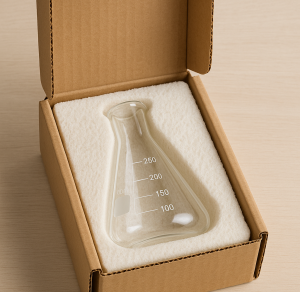 Fibu is intended for dry internal cushioning where packaging teams want foam-like thickness and compression in a fiber-based format. Its strongest PPWR relevance appears in a coherent fiber-based package: a corrugated box with wood-fiber cushioning intended for the same recycling route.
The material will not suit every application. Persistent moisture exposure or specialised performance requirements may call for another solution. Protection must also be verified at package level; a proven EPS design should not simply be copied in another material without redesign and testing.
What packaging teams can do now?
Map the function, material and expected waste route of every component. Identify where plastic is essential, where volume can be reduced and where a fiber component could simplify the package. Test the redesign against real distribution hazards and ask suppliers for the evidence needed for technical documentation.
Keep regulatory claims precise. “Fiber-based,” “repulpable under tested conditions” and “designed for paper recycling” each mean something different from “PPWR compliant.” Designs made now should also leave room to adjust as the detailed EU methods become final.
A better packaging brief
The first responsibility of protective packaging remains unchanged: the product must arrive undamaged. PPWR expands the brief. The package should provide the required protection with less material, a credible recycling route and evidence that can withstand scrutiny.
For many products shipped in corrugated boxes, the protective insert is an important place to begin. A fiber-based cushioning material can help align protection with the paper-packaging system, provided that the full package is properly designed, tested and documented. Fibu works with packaging suppliers and product manufacturers to evaluate wood-fiber foam in real packaging applications.
Related reading
This article provides general information and is not legal advice. Requirements and implementation dates should be checked against the current legislation and guidance for the specific packaging and market.